Great news - we are updating our site. If you feel that there is anything to be changed on your account please reach out to the office directly
310-305-7855. We would be happy to help.
310-305-7855. We would be happy to help.

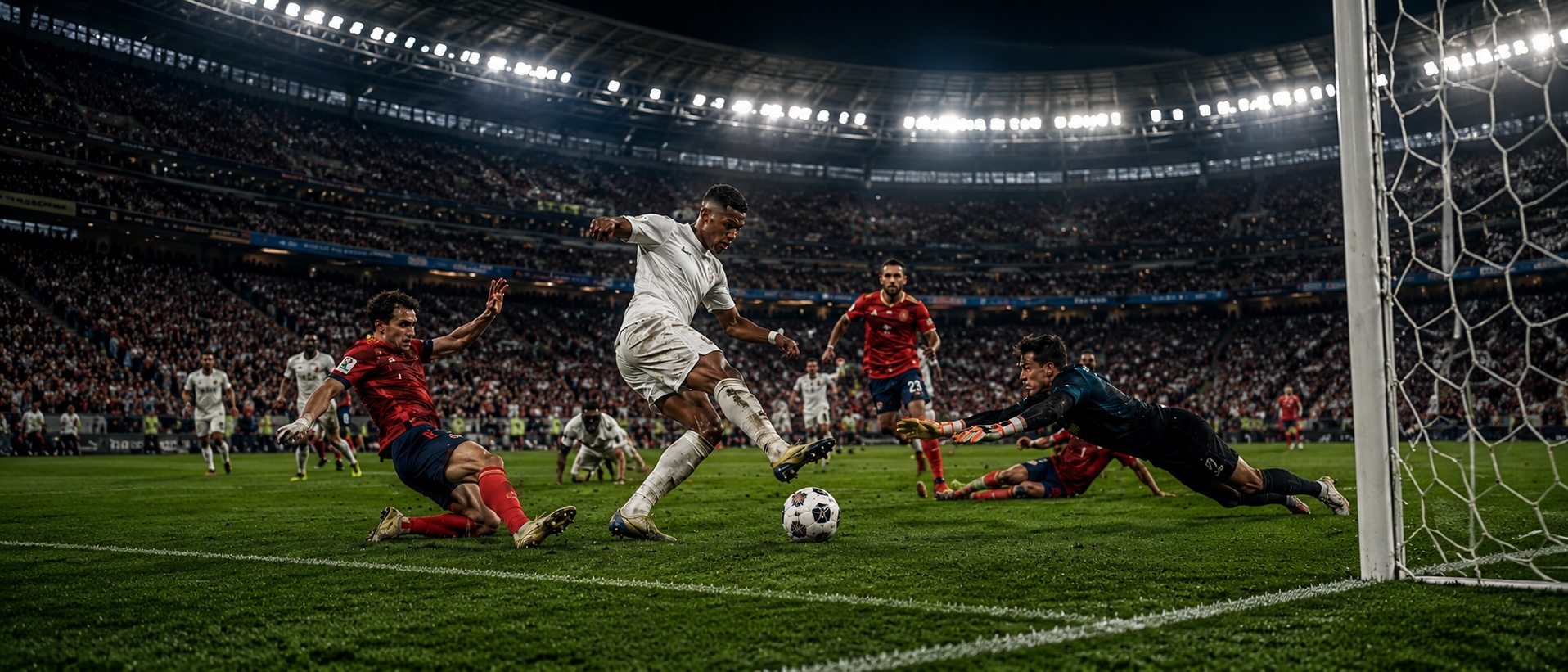
Quick answer: Playing full out means giving complete effort regardless of the stakes, the scoreboard, or who is watching — and the final weekend of the 2026 World Cup delivered two unforgettable demonstrations of it. In a third-place match widely expected to be a low-energy formality, England and France produced a 6–4 thriller, the highest-scoring World Cup match in forty-four years, with France storming back from 4–0 down. A day later, Spain won the final in the 106th minute of extra time — proof that the decisive moment often arrives after you thought the game should be over. The lesson: full-out effort is not a response to high stakes. It is a standard you carry into everything.
There is a question hiding inside every commitment you have ever made: How hard will you go when it stops mattering?
When the promotion is off the table. When the season is lost. When the relationship is strained and no one would blame you for coasting. When the game is technically still on, but the prize you wanted is gone.
This past weekend, on the biggest sporting stage on Earth, two matches answered that question in a way worth studying — and the more instructive of the two was the one that was not supposed to matter at all.
Two matches closed out the 2026 tournament.
On Saturday in Miami, England and France met in the third-place playoff — the consolation match between the two semifinal losers. On Sunday, Spain defeated Argentina 1–0 in the final, with Ferran Torres scoring the only goal in the 106th minute — deep into extra time — to give Spain its second World Cup title.
The final was history. But the third-place match was a masterclass.
Understand the setup. The third-place playoff is famously the game nobody wants to play. Both teams arrive carrying the freshest heartbreak in sport — a semifinal loss with the final in sight. Days earlier, Spain had beaten France 2–0, and Argentina had ended England's run. Observers expected a flat, low-energy formality. England's lineup seemed to confirm it: captain Harry Kane and star midfielder Jude Bellingham did not start, and the first-choice goalkeeper was rested.
Then Declan Rice, wearing the captain's armband, scored from distance in the third minute — and both teams decided, apparently in unison, that this match was going to matter because they said it mattered.
England built a stunning 4–0 halftime lead — Rice's opener, a headed goal from Ezri Konsa, and two from Bukayo Saka. A humiliation looked likely for France in coach Didier Deschamps' final match in charge.
France's response is the part to remember.
Down four goals, in a match with no trophy at stake, with every excuse available — France attacked. Kylian Mbappé scored in the 48th minute. Bradley Barcola made it 4–2. Then Mbappé struck again in the 66th, and with that goal became the all-time leading scorer in World Cup history, while Michael Olise, who assisted both of Mbappé's goals, passed Pelé for the all-time World Cup assist record.
Sit with that for a moment. The most significant individual scoring record in the sport's biggest tournament was claimed in the game that supposedly did not count — by a player who chose to go full out anyway.
England answered. Saka completed his hat trick from the penalty spot, Ousmane Dembélé pulled France back within one in stoppage time, and Jude Bellingham — who had not even started — dribbled through three defenders to seal it, 6–4. The most goals in a World Cup match since 1982. Neutral observers called it one of the best World Cup games ever played.
A meaningless match. And neither team treated a single minute of it that way.
Because of what it reveals — and what it builds.
Full-out effort is identity, not strategy. If your effort rises and falls with the stakes, then the stakes own you. The players in Miami demonstrated the alternative: effort as a standard you bring, not a price you negotiate. In transformational work, this principle is often expressed simply — how you do anything is how you do everything. The professional who coasts through "small" tasks is rehearsing coasting. The one who brings full presence to the meeting nobody important attends is rehearsing excellence. You are always training for something.
Low-stakes moments are where breakthroughs hide. Mbappé's record and Olise's record were not set in the final. Bellingham's iconic goal did not come with a trophy attached. Some of the most defining moments of your life will arrive in rooms you almost skipped, in efforts nobody required of you. Playing full out keeps you present for them.
Comebacks begin before the scoreboard changes. France's rally did not start with the first goal in the 48th minute. It started in the locker room at halftime, down 4–0, when they decided the second half was theirs to shape. That decision — made while still losing, with no evidence it would work — is the essence of resilience. It echoes what M.I.T.T. explored in the story of an 82-year-old survivor who endured nine days alone: the pivot from this is hopeless to what can I do right now is a choice, and it is available in every circumstance.
Sunday's final adds the second half of the lesson.
For 105 minutes, Spain and Argentina — the tournament's two best teams — could not be separated. Regulation ended scoreless. Extra time ground on. And then, in the 106th minute, Torres scored the goal that decided a World Cup.
There is a truth here that applies far beyond sport: the game is often longer than you planned for. The business that breaks through in year four of a three-year plan. The job search that resolves in month eight. The reconciliation that comes after you had quietly given up on it. People rarely fail because the goal was impossible; they fail because they budgeted their endurance for regulation time, and the decisive moment lived in extra time.
Spain's entire tournament made the same point. La Roja opened the World Cup with a shocking scoreless draw against tiny Cabo Verde — the smallest nation in the field, whose own resilience M.I.T.T. wrote about earlier this tournament. Pundits questioned Spain's edge. Seven weeks later, Spain were champions, having conceded only one goal in the entire tournament. A disappointing start determined nothing. What determined everything was how they played every match after it.
The World Cup ends. Your season does not. Here is what the principle looks like off the field:
Choose your standard before the day chooses it for you. Decide in advance that your effort is not contingent — not on recognition, not on mood, not on whether this task "counts." Contingent effort is fragile. Chosen effort is durable.
Find your third-place matches. Identify the areas of your life you have quietly labeled as not mattering — the role you are leaving, the project that lost its shine, the relationship running on autopilot — and bring full presence to one of them this week. Watch what changes, in the situation and in you.
When you are down 4–0, shrink the goal. France did not chase four goals at once; they chased one, then the next. In any deep deficit, the full comeback is overwhelming but the next single action is not. Take it.
Budget for extra time. Whatever you are building, assume the decisive moment comes later than planned — and decide now that you will still be on the field when it does.
Developing the capacity to play full out — in every arena of life, not just the ones with trophies — is central to the work at M.I.T.T. — Mastery in Transformational Training. Through experiential leadership training and transformational courses, participants confront the places where they have been holding back and discover what becomes possible at full commitment. If you recognize yourself somewhere in this article — coasting in a season that deserves more of you — that recognition is the starting line. Explore M.I.T.T.'s trainings.
Q: What does "playing full out" mean?A: Playing full out means bringing complete effort, presence, and commitment to whatever you are doing, independent of the stakes, the likely outcome, or who is watching. It treats effort as a personal standard rather than a transaction — the opposite of coasting when a situation seems not to count.
Q: What was the highest-scoring match of the 2026 World Cup?A: The third-place playoff on July 18, 2026, in which England defeated France 6–4 — the most goals scored in a World Cup match since 1982. England led 4–0 at halftime before France rallied with three straight goals; Bukayo Saka completed a hat trick and Jude Bellingham sealed the result late.
Q: How did Spain win the 2026 World Cup final?A: Spain defeated Argentina 1–0 on July 19, 2026, with Ferran Torres scoring the decisive goal in the 106th minute of extra time. It was Spain's second World Cup title, and they conceded only one goal across the entire tournament despite opening with a scoreless draw against Cabo Verde.
Q: Why does effort matter when the outcome no longer does?A: Because effort is habit-forming and identity-shaping. Consistent full effort in low-stakes situations builds the capacity to deliver in high-stakes ones, keeps you present for unexpected opportunities, and — as France's comeback and Kylian Mbappé's record demonstrate — low-stakes moments frequently turn out to matter far more than they appeared.